


News

Here you can find the latest updates on the Collaborative Research Centre "Global Dynamics of Social Policy": summaries of current research results, references to our latest publications, outcomes of events and more news from the projects and their staff members.


(c) CRC 1342/University of Bremen
edited by Ivo Mossig (INF), Sarah Berens (B14) and Aysegül Kayaoglu (B06)

As announced previously, INF has successfully secured funding for an edited volume in the third phase of the CRC. This volume aims to demonstrate how WeSIS data can be effectively used to analyze the introduction (CRC Phase 1), design (CRC Phase 2), and outcomes (CRC Phase 3) of social policies worldwide. The core idea behind this volume is to make our CRC indicators conceptually and practically accessible to the research community by analyzing (and visualizing) them and, in doing so, to raise awareness of and promote our data. For this purpose, we consider it important to cover all three research phases of CRC 1342. We will therefore circulate this call among former members from the first two phases.

While all contributions must directly engage with WeSIS data, we particularly welcome so-called "tandem contributions", i.e. co-authored chapters in which one or more authors are not members of CRC 1342. Co-authorship with researchers outside the CRC is encouraged but not mandatory. The edited volume can thus serve as a multiplier for the use of WeSIS data, increasing its visibility and recognition among the broader community of social policy researchers at other institutions. This is vital for the long-term development and use of WeSIS. INF will offer small training workshops for external collaborators; CRC members are also very welcome to attend.

As discussed in the PI meeting, we aim to include relatively concise contributions of 3,000–4,000 words (excluding references).

Why participate?

In our view, this volume offers an excellent opportunity to highlight the broader contexts and research questions underlying your own project work. The aim is to showcase some of the data that you and other CRC members have so meticulously collected since the establishment of CRC 1342 in 2018. The edited volume provides space to visualize descriptive patterns of welfare state development, to compare multiple countries or regions, or to zoom in on a specific case – material that is often highly interesting but rarely makes it into space-constrained journal articles. It also offers the opportunity to introduce and present your indicators to the relevant research community as well as to policy experts and practitioners working in the field. We are particularly interested in analytical contributions that test theoretical arguments with WeSIS data. However, descriptive contributions that address a clearly defined research question or reveal interesting empirical puzzles are equally welcome. Furthermore, the volume provides a valuable platform for doctoral researchers to document the context, preliminary investigations, and initial findings of their qualification projects that make use of WeSIS data.

How to Participate? - Call for Abstracts

As a first step, we kindly invite all projects from all three phases to participate by submitting an abstract of 250–400 words. In addition to the names and affiliations of all authors, including any external co-authors, abstracts should address the following aspects:

  • What is the research question, objective, or goal of the contribution?
  • To which of the following thematic sections does your contribution fit best?
    a) Introduction of social policies and diffusion of the welfare state (CRC Phase 1),
    b) Design of social policies: Inclusiveness and scope of benefits (CRC Phase 2),
    c) Social policy outcomes (CRC Phase 3)
    d) Methods: Using WeSIS Data to map global social policies?
  • What is the geographical scope of the contribution?
    a) global, b) regional (e.g., EU, Africa, OECD), or c) national?
  • Which WeSIS data will be used, and how? Please feel free to contact the INF team if you need support, for example in identifying or selecting suitable data.


If you plan to include a specially designed illustration, figure, or map in your contribution, please indicate this in the abstract as well.

Timeline:

31.10.2026:  Submission of abstracts by e-mail to Ivo, Sarah and Aysegül
(mossig@uni-bremen.de, sarah.berens@uni-bremen.de, ayseguel.kayaoglu@uni-mannheim.de)

Jan. 2027:    Feedback on abstracts and workshops on using WeSIS data

30.04.2027:  Submission of first drafts, followed by internal peer review

30.06.2027:  Feedback returned to authors

31.09.2027:  Submission of revised/final versions

30.11.2027:  If necessary final feedback and submission of final revisions; completion of the final manuscript and submission to the publisher

Spring 2028: Publication of the book

We look forward to receiving your abstracts and to any feedback or questions you may have.

Best regards,

Ivo, Sarah & Aysegül


Contact:
Prof. Dr. Sarah Berens
CRC 1342: Global Dynamics of Social Policy
Mary-Somerville-Straße 5
28359 Bremen
Phone: +49 421 218-58603
E-Mail: sarah.berens@uni-bremen.de

Dr. Aysegul Kayaoglu
MZES
A5, 6
68159 Mannheim
E-Mail: ayseguel.kayaoglu@uni-mannheim.de

Prof. Dr. Ivo Mossig
CRC 1342: Global Dynamics of Social Policy
Mary-Somerville-Straße 7
28359 Bremen
Phone: +49-421-218 67410
E-Mail: mossig@uni-bremen.de

(c) Cedric Meyer
(c) Cedric Meyer
Five-week research trip in July and August 2026

Cedric Meyer, Doctoral Researcher in Project B15 "Under Global Shock: Outcomes of Different Social Protection Programs in Britain, Chile, and Germany, 1970–2000", spent some weeks in Glasgow this summer. There, he examined numerous documents held by local university archives and libraries. His research focus is on the crisis of Glasgow’s shipbuilding industry and how it was addressed through social policy – by national government, but also by regional as well as local agencies and decisionmakers.

Compared to many other industries, as well as to the shipbuilding industry in other countries, the shipyards in Glasgow (and the rest of the United Kingdom) fell into serious crisis relatively early on. Accordingly, it seems plausible that the early social policy response may already display some features which would become more common from the general economic crisis of the 1970s onwards. To obtain the most precise picture possible of these developments, various sources will be analyzed and interpreted in accordance with the historical method.

While the National Records of Scotland in Edinburgh as well as the National Archives in London may contain relevant documents, Glasgow ended up being the destination of the first research trip due to the regional research focus. There, the libraries and archives of the University of Strathclyde, of the Glasgow Caledonian University, and of the University of Glasgow were visited. The former has assembled an impressive oral history collection, containing numerous interviews with former shipyard workers. However, these will only be analyzed in detail in the following weeks and months, as the collection can also be accessed from Bremen. In the archive of the Glasgow Caledonian University, Cedric Meyer examined the records of the Association of Directors of Social Work. These provided insight into priorities and problem perceptions, as well as political advocacy by Scottish social workers during the study period.

Particularly informative were the sources held by the University of Glasgow, though. Those include various documents of the Strathclyde Regional Council, a Scottish regional agency that existed from 1975 to 1996. On the one hand, said documents provided detailed information regarding local poverty, unemployment, housing shortages etc. On the other hand, it also became apparent here how the council sought to make use of its limited scope for action in the area of social policy – from Margaret Thatcher’s inauguration in 1979 onwards, in clear opposition to the national government’s cuts to social benefits. Another interesting set of sources held by the University of Glasgow were the issues of the journal Shipbuilding & Shipping Record (renamed to Marine Week in 1974). These were highly valuable for tracing how the shipbuilding industry perceived its own crisis, different rescue attempts, and the eventual controlled contraction of the shipbuilding sector.

Based on these various sources and some previously read literature, several key policies of the national government have now been identified. Therefore, a two-week research trip to the National Archives in London is scheduled for late September, during which government documents will be analyzed in the hope that they will provide insights into the relevant decision-making processes.


Contact:
Cedric Meyer
CRC 1342: Global Dynamics of Social Policy, Institut für Geschichtswissenschaft / FB 08
Universitäts-Boulevard 13
28359 Bremen
E-Mail: ceme@uni-bremen.de

(c) Alexander Münch
(c) Alexander Münch
"SheCitizen: She as Citizen: Female Parliamentarians and the Emergence of Social Citizen­ship"

The Principal Investigator of CRC Project A06 "Work-family Policies: Socioeconomic Outcomes and Policy Learning", Dr. Keonhi Son, has been awarded one of the prestigious ERC Starting Grants by the European Research Council. The grant provides nearly €1.5 million in funding over the next five years (2027–2031). In her research project "SheCitizen", Dr. Son investigates the role played by women parliamentarians in the emergence and development of women’s social and labour rights.

"In my ERC project, SheCitizen, I examine the historical origins of women's labor and social rights in advanced capitalist societies, tracing the socio-economic and political factors that historically shaped state governance of women's labor from the late 19th to the mid-20th century."

The European Research Council (ERC) supports researchers at an early stage of their careers through its Starting Grant scheme. A total of 4,807 researchers applied for the €705 million in funding available in this call, with 421 researchers ultimately selected for an award. Dr. Keonhi Son is among the successful grantees. Further information: [ERC Starting Grants]


Contact:
Dr. Keonhi Son
MZES
A5, 6 (Building A)
68159 Mannheim
Phone: +49 621 181-2803
E-Mail: son@uni-mannheim.de

(c) University of Bremen
"Global Challenges and Regional Responses in a Transition Era"

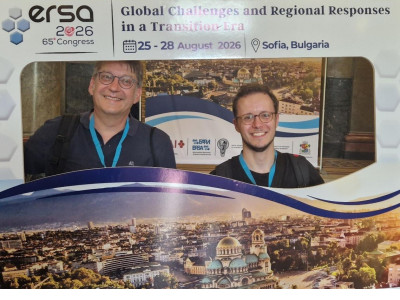
Prof. Ivo Mossig and Hannes Lehmann of the INF team presented their technical paper, "Filling Data Gaps in the Measurement of Income Inequality: A Complete Dataset of National GINI Coefficients, 1995–2019," at the 65th Conference of the European Regional Science Association (ERSA). Held in Sofia, Bulgaria, from 25 to 28 August 2026, the conference brought together more than 600 participants from 55 countries under the theme "Global Challenges and Regional Responses in a Transition Era."

"I was very pleased with the positive feedback on our approach of using a machine-learning algorithm based on a Gradient Boosting Machine to predict missing data," says Hannes Lehmann. Ivo Mossig adds: "The presentation also provided an excellent opportunity to introduce the CRC 1342 and our central database, WeSIS, to the regional science community." The approach helps to close substantial gaps in the available data, particularly for countries in the Global South. It now enables researchers to compare income inequality across different countries over time on the basis of a consistent and comprehensive dataset.

The dataset is available in WeSIS: https://wesis.org/indicators/2588

The corresponding Technical Paper No. 24 is available here: https://doi.org/10.26092/elib/5604


Contact:
Prof. Dr. Ivo Mossig
CRC 1342: Global Dynamics of Social Policy
Mary-Somerville-Straße 7
28359 Bremen
Phone: +49-421-218 67410
E-Mail: mossig@uni-bremen.de
(c) Seyedeh Mina Tahaei
Interview, 19.08.2026

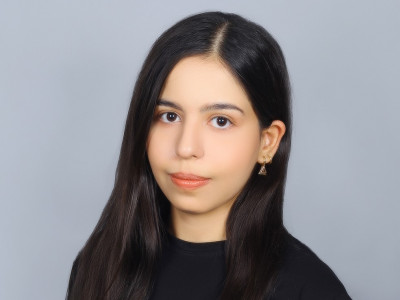
In this interview, Seyedeh Mina Tahaei introduces herself. Since the beginning of the third funding period in early 2026, she has been a member of the Information Management Project (INF). As a doctoral researcher, she is currently working on her dissertation on Research Data Management in the social sciences. In addition, she serves as Chair of the Equal Opportunities Committee (EOC) and, in this capacity, represents the committee on the CRC 1342 Board.

The interview was conducted by Dr. Maximilian Hohmann.

What is your role within the Collaborative Research Centre 1342 "Global Dynamics of Social Policy" and which project are you involved in?

I am currently a first-year doctoral researcher at the CRC 1342 and I am part of the INF project, working on the development of the WeSIS platform. My research focuses on data sharing and FAIR data principles in Research Data Management for the social sciences, as well as tools and methods to make collaboration, data sharing, and RDM among social scientists easier.

What is your academic background? At which universities and in which countries did you study?

I started my bachelor’s in Computer Engineering at Iran University of Science and Technology in my hometown, Tehran. At the time, my main goal was to become a game designer and developer, so I joined the Game Design lab. There, I was introduced to topics such as User Experience and User Research, particularly in video games, and that motivated me to learn more about Human-Computer Interaction and continue my education in Media Informatics for my master’s at the University of Bremen. The same interest in User Psychology and HCI branched into the field of xAI (Explainable AI) during my master’s, inspiring me to pursue a PhD in Computer Science at the CRC 1342.

Which voluntary roles have you taken on within CRC 1342, and what motivated you to take on these responsibilities?

I am part of the Equal Opportunities Committee at the CRC, and currently serve as the Chair. In that role, I represent the committee on the CRC’s executive board, organize our meetings, and ensure the equal opportunity funds are used by CRC researchers to further their academic progress and career goals, and that the EOC offers support to everyone, especially people who are not always represented in the research community. Many researchers manage responsibilities such as caring for someone while pursuing their research, as well as settling into a new country and navigating culture and language, which can be overwhelming. Therefore, I was motivated to take the role because I wanted to support fellow researchers in handling the organizational side of academic life and connect with the CRC as a whole.

What do you find particularly interesting or rewarding about working within CRC 1342?

I really like the intersectionality of the fields of research at the CRC 1342. As a computer scientist, I now collaborate with social scientists as part of my research project, and there are many ongoing projects in the CRC across different aspects of social policy and the social sciences, allowing me to expand my knowledge and experience and collaborate with researchers from different fields.

What are you currently working on, and what are you particularly excited about in your research at the moment?

In particular, at the moment I am working on the factors that motivate social scientists when it comes to sharing their research data with the community and which designs and methods, particularly in the field of recommender systems, would facilitate this motivation. What fascinates me most is how closely intertwined different disciplines such as social sciences and humanities and design and technology are, and how they shape and influence each other again and again. I am very excited to see what I am going to learn and find out during the course of my PhD project.


Contact:
Seyedeh Mina Tahaei
CRC 1342: Global Dynamics of Social Policy
Mary-Somerville-Straße 7
28359 Bremen
Phone: +49 421 218-57090
E-Mail: tahaei@uni-bremen.de

(c) Maximilian Hohmann
News about Global Dynamics of Social Policy

The Collaborative Research Center "Global Dynamics of Social Policy" is represented on Bluesky as well as on Mastodon and X. On these channels you will always find the latest news about the CRC 1342.

Furthermore, we also recommend the blog Social Policy Worldwide of the SOCIUM Research Center Inequality and Social Policy at the University of Bremen.


Contact:
Dr. Maximilian Hohmann
CRC 1342: Global Dynamics of Social Policy
Mary-Somerville-Straße 3
28359 Bremen
Phone: +49 421 218-57058
E-Mail: hohmann@uni-bremen.de

(c) Oxford University Press
Oxford University Press

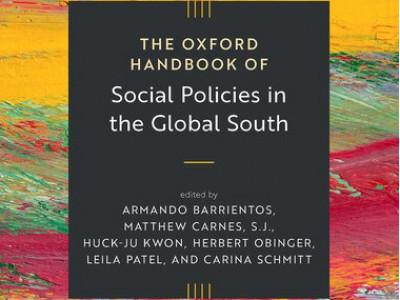
Prof. Dr. Herbert Obinger and Prof. Dr. Carina Schmitt, both Directors of Project A09 "Worlds of Welfare Across the Globe. Origins and Outcomes", are members of the editorial team of The Oxford Handbook of Social Policies in the Global South. The volume was published by Oxford University Press last week and is now available.

[The Oxford Handbook of Social Policies in the Global South]

Collectively, the contributions consider three main research questions: What are the main social policies and institutions in place in the Global South? What explains their current level of development and future dynamics? And what are the outstanding factors influencing social policies in the Global South?

The volume provides a comprehensive overview of the current state of research on social policies at the global, regional, and national levels. The contributions were written with the explicit aim of offering an informed, accessible, and thorough introduction to social policies in the Global South. As such, the handbook serves as an ideal starting point for both specialists and non-specialists seeking to familiarize themselves with key themes, regions, and countries in the field of social policy in the Global South.


Contact:
Prof. Dr. Herbert Obinger
CRC 1342: Global Dynamics of Social Policy
Mary-Somerville-Straße 5
28359 Bremen
Phone: +49 421 218-58567
E-Mail: herbert.obinger@uni-bremen.de

Prof. Dr. Carina Schmitt
University of Bamberg
Feldkirchenstraße 21
96045 Bamberg
Phone: 0951-863 2734
E-Mail: carina.schmitt@uni-bamberg.de

(c) LSE
(c) LSE
Open Access

A recent article by Prof. Dr. Torben Klarl has been published in Economica, a leading international journal of economics published by the Department of Economics at the London School of Economics and Political Science (LSE). Since the beginning of the third funding phase of CRC 1342, he has contributed to Project A10, "Causal Impacts of Pension Reforms on Socioeconomic and Political Outcomes". The article has been published on an Open Access basis and is freely available to readers worldwide.

[https://onlinelibrary.wiley.com/doi/10.1111/ecca.70060]

Abstract:

This paper investigates the impact of creativity on technological advancement, long-term economic development, and social welfare, where creativity is determined endogenously through interactions within social networks. The analysis shows that an economy remains stagnant, exhibiting neither networking nor long-term growth, when the size of the creative class falls below a positive threshold. Once this threshold is exceeded, active networking between creative and non-creative individuals emerges, fostering sustained technological progress and income growth. The model is calibrated and used to simulate the transition from stagnation to sustained growth. The results indicate meaningful welfare gains from such a transition, driven by the cumulative effects of technological progress facilitated by networking.

Economica is an international journal covering research in all branches of economics published on behalf of the London School of Economics and Political Science Economics Department (LSE). It welcomes high-quality contributions from all parts of the international research community which are of interest to general readers. It is a leading economics journal, appearing high in the published citation rankings.

Torben Klarl is Professor of Macroeconomics at the University of Bremen. His research interests include artificial intelligence, climate change, political economy, development economics, and economic growth.


Contact:
Prof. Dr. Torben Klarl
CRC 1342: Global Dynamics of Social Policy, Faculty of Business Studies and Economics
Max-von-Laue-Straße 1
28359 Bremen
Phone: +49 421 218-66560
E-Mail: tklarl@uni-bremen.de

(c) Aysegül Kayaoglu
18 June 2026, Fundación Ramón Areces, Madrid

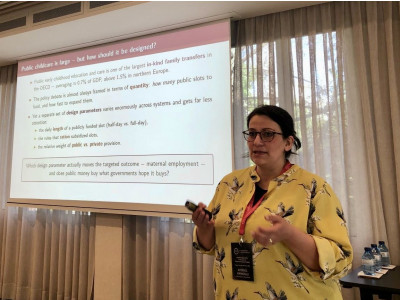
Dr. Aysegül Kayaoglu from the project A06 "Work-family Policies: Socioeconomic Outcomes and Policy Learning", presented the paper "Which Childcare Raises Maternal Employment? Public, Private and the Rationed Margin in Türkiye" at the 3rd Workshop on the Economics of Health and Human Capital, held at the Fundación Ramón Areces in Madrid on 18 June 2026.

Drawing on monthly employment histories of women combined with province-level data on childcare facilities, the paper examines how the design of childcare policy — not merely its availability — shapes maternal employment in Türkiye. It distinguishes between public and private provision and pays particular attention to the rationed margin, where demand for subsidised places exceeds supply, to identify which forms of childcare actually move mothers into work.

The workshop builds on earlier editions hosted in Madrid in 2024 and in Castellón de la Plana in 2025. Jointly organised by Universidad Autónoma de Madrid (UAM) and Universitat Jaume I (UJI), it brings together state-of-the-art econometric, data science and causal inference methods applied to questions in the economics of health and human capital. The single-day programme features ten papers, each allocated 30 minutes for presentation and open discussion, with participation capped at around twenty researchers. This year's keynote lecture was delivered by Gabriella Conti (University College London). 


Contact:
Dr. Aysegul Kayaoglu
MZES
A5, 6
68159 Mannheim
E-Mail: ayseguel.kayaoglu@uni-mannheim.de

(c) Maximilian Hohmann
Information and Exchange Meeting on 24.06.2026

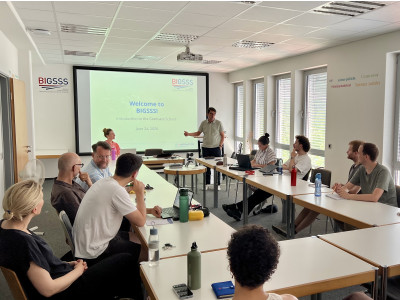
Ahead of the start of the new BIGSSS cohort in September 2026, the Graduate School welcomed the new Doctoral Researchers who recently joined the CRC 1342. In addition to Professor Patrick Sachweh, Dean of the Bremen International Graduate School of Social Sciences, Dr. Regina Arant, Director of Studies, and Managing Director Dr. Christian Peters provided an overview of upcoming milestones, academic requirements, and the support services available through the Graduate School. Representing CRC 1342, the event was attended by its spokesperson Professor Sarah Berens and its Managing Director Dr. Irina Wiegand.

The Bremen International Graduate School of Social Sciences is one of Germany’s leading institutions for doctoral training in the social sciences. Its interdisciplinary programme is built around the core disciplines of political science, sociology, and psychology and is jointly operated by the University of Bremen and Constructor University. For Doctoral Researchers within the Collaborative Research Centre "Global Dynamics of Social Policy", participation in the Graduate School’s structured doctoral training programme forms an integral part of their academic qualification and professional development.


Contact:
Dr. Irina Wiegand
CRC 1342: Global Dynamics of Social Policy
Mary-Somerville-Straße 5
28359 Bremen
Phone: +49 421 218-58508
E-Mail: irina.wiegand@uni-bremen.de